Why Spot Trading, NFT Marketplaces, and Launchpads Still Matter — Even If You’re Jaded

Okay, so check this out—I’ve been in crypto long enough to have that weird mix of excitement and eye-roll. Wow. Seriously? Yep. But here’s the thing. Spot trading, NFT marketplaces, and launchpads keep reinventing themselves, and if you trade on a centralized exchange you should care. My instinct said ignore the noise, but then some patterns kept popping up that I couldn’t shrug off.

First impressions matter: spot trading feels familiar and safe compared to derivatives, and NFTs? They kept surprising me. Initially I thought NFTs were just hype, but then I noticed real utility emerging in niche markets—music rights, game assets, membership tokens. On one hand people still flip JPEGs. On the other hand whole new ecosystems are being built. Actually, wait—let me rephrase that: not every project is meaningful, though some are foundational, and distinguishing them matters.

Let me be blunt. If you use a centralized venue for trading and custody, your user experience changes what strategies even make sense. Trading fees, order types, liquidity — these bite you over time. And launchpads—ah—launchpads are where allocation and initial price discovery collide, sometimes beautifully, sometimes painfully. My gut said launchpads were pay-to-win at first, but I’ve seen carefully run ones actually help projects find product-market fit.

Close-up of a trader's screen showing spot order book and NFT gallery, hands hovering over keyboard

Spot Trading: The Bedrock—But It’s Not Passive Income

Spot trading is where I started. Quick: it’s simple. You buy, you hold, you sell. Medium risk. Medium complexity. But listen—simplicity is deceptive. Liquidity dries up. Slippage bites. Fees compound. You can be very very careful and still pay more than you think.

Here’s a short checklist for spot traders on centralized exchanges: know the order types, set stop-losses when you can, watch depths not just prices. Something felt off about traders who only watch candles; order flow tells a richer story. Hmm…

Why use a reputable CEX? Mostly for liquidity and execution. If you want tight spreads and reliable fills, that matters. I’m biased, but having solid custody and quick fiat on/off ramps saves stress during volatile squeezes. Okay, so check this out—platforms that combine clear UI, advanced order types, and decent API support let you scale strategies without turning into an ops nightmare.

NFT Marketplaces: More Than Collectibles (Sometimes)

NFTs are messy. They’re brilliant. They’re annoying. Wow. But for traders and investors who use centralized exchanges, marketplaces provide different playbooks: speculation, utility acquisition, and exposure to creator economies. My first instinct was to treat NFTs like equities—and that failed. Actually, NFTs need a different mental model: they’re a mix of social proof, utility, and scarcity.

Observation: marketplaces that integrate with CEX wallets reduce frictions dramatically. You can buy with a card or native balance, and suddenly participation widens. (Oh, and by the way…) if a marketplace supports royalties and offers discoverability tools, it sustains creator communities, which matters long-term more than the one-off mania.

Here’s what bugs me about a lot of NFT launches: communities get excited, price rockets, then utility is absent and interest fades. Better projects pair scarcity with continuing value—access, dividends, game mechanics. That combination is what turns short-lived hype into a durable asset class.

Launchpads: Allocation Opportunity or Casino?

Launchpads get a bad rep. Yeah. They do. And yet—they also channel early token distribution in a way that can be orderly, if the gatekeeping is sensible. My experience: the best launchpads have rigorous vetting, tokenomics transparency, and clear vesting schedules. On the flip side, sloppy launchpads reward marketing noise not fundamentals.

Initially I thought all launchpad allocations were rigged. Then I studied a few projects where the launchpad’s curation actually improved project outcomes—less rug, more dev follow-through. On one hand launchpads democratize access. Though actually, without careful rules they just re-route FOMO into early investors’ pockets.

If you trade on a centralized exchange, check whether their launchpad integrates KYC, clear snapshot mechanics, and fair allocation algorithms. Those make participation less about insider loops and more about merit—well, relative merit, anyway. I’m not 100% sure, but it’s better than the alternative.

How These Three Interact — The Big Picture

Here’s the connective tissue: spot markets provide liquidity and real price signals; NFT marketplaces attract and retain communities; launchpads seed new token ecosystems. When these parts work together on a centralized exchange, you get a smoother lifecycle for projects from inception to secondary-market liquidity.

For example, a project launching on a vetted launchpad that also mints limited NFTs for early supporters can drive cross-market demand on the exchange’s spot market. Traders flip, collectors hold, and token economics evolve. Initially it sounds tidy; in reality there are many failure modes—token inflation, wash trading, poor governance—that derail it. My instinct said it’s too neat; then I saw cases where the interplay genuinely improved token longevity.

Risk note: centralized systems centralize risk. Custody, regulatory clampdowns, and black swan exchange outages are real. Keep some funds in self-custody where practical. But for active trading, centralized venues still offer speed and features most retail traders need.

Practical Tips for Traders and Investors

– Use order types smartly: market orders for fast fills, limit orders to control cost. Stop losses are underrated.
– Vet NFTs for utility, community, and creator track record. Don’t buy just because floor price moved.
– For launchpads: read the tokenomics and vesting. If allocation feels too concentrated, step back.
– Diversify where seeds are planted: a portfolio with spot positions, selective NFTs, and small launchpad allocations can balance upside and survivability.

If you want a place that bundles these services with reasonable UX and liquidity, check out platforms that have integrated trading, NFT drops, and launchpad functionality. One resource I keep coming back to is bybit crypto currency exchange, which ties a lot of these features into a single workflow—convenient, though not a free pass. I’m biased, but having that sort of ecosystem reduces friction when you’re juggling strategies.

FAQ

Should I keep everything on a centralized exchange?

No. Short answer: use a CEX for active trading and liquidity, but move long-term holdings or high-value NFTs to self-custody. It’s a trade-off between convenience and control—you’re trading one set of risks for another.

Are launchpads worth participating in?

They can be. If the launchpad has strong vetting, transparent tokenomics, and fair allocation rules, they can offer early access at reasonable risk. Still, expect many failures—allocate small, do your homework, and accept that most wins won’t cover your losses.

How do I avoid NFT traps?

Look for use cases beyond speculation: utility, creator reputation, and active community engagement. Avoid projects with opaque supply mechanics or questionable royalty rules. Also, be skeptical of instant flippers—sustainable demand matters more than a one-day spike.

Think Rabby Is Just a MetaMask Clone? Think Again — and Here’s When to Use It

What if the difference between an expensive mistake and a safe DeFi interaction is a simulation that shows you exactly what will change in your wallet before you hit “confirm”? That claim—simple, almost prosaic—helps reframe how sophisticated DeFi users should evaluate browser wallets. Rabby’s Chrome/Chromium extension is not merely another interface to your keys; it layers transaction simulation, risk scanning, and revocation tools into the signing flow. For power users who move assets across chains and contracts, those features are mechanism-level defenses, not cosmetics.

Below I explain how Rabby’s extension works in practice, what problems it actually reduces (and which it does not), and a practical decision framework for when to prefer Rabby over other EVM wallets. I’ll identify common misconceptions, show the trade-offs around custody and convenience, and end with concrete red flags and near-term signals to monitor in the US DeFi environment.

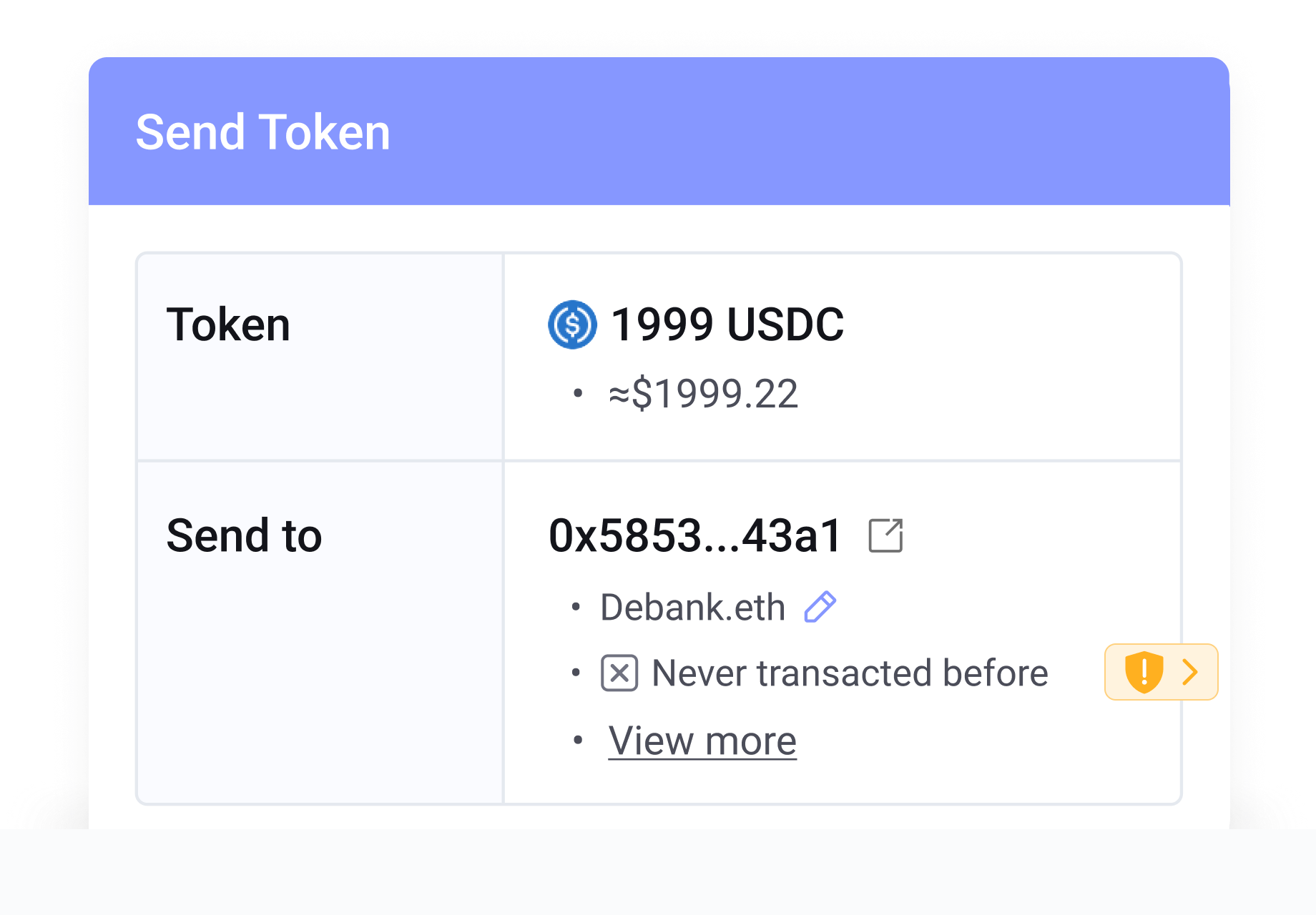
Screenshot-style schematic of transaction risk scanning and simulation that shows predicted token changes and flagged risks before signing

How Rabby’s Chrome extension changes the signing calculus

At its core Rabby is a non-custodial, multi-chain wallet developed by DeBank that plugs into Chromium browsers. The technical distinction that matters most for security-minded users is transaction simulation: before you sign, Rabby executes a dry-run of the transaction against a node to estimate token balance deltas, gas costs, and any state changes. That single mechanism addresses a common attack vector—“blind signing”—where a user signs an opaque payload and later discovers unwanted approval or asset movements.

Transaction simulation is not magic. It relies on reading the intended transaction calldata, running it against the current chain state, and showing estimated results. That enables two practical outcomes: first, you see an explicit estimate of token outflows and inflows (so a swap that will wipe one token becomes visible); second, the extension can flag mismatches, such as unusually large approval amounts, transfers to new recipient addresses, or calls to contracts with known compromise histories. The latter comes from Rabby’s built-in security engine and risk database.

What Rabby actually prevents—and what it won’t

Misconception: simulation equals invulnerability. Correction: simulation reduces specific classes of user-facing risk but does not eliminate systemic risks or bad on-chain logic. Rabby prevents many instances of accidental overspending, malicious approval creep, and signing of obviously harmful transactions. But it cannot protect against a benign-looking transaction that encodes complex, valid logic producing a harmful off-chain effect, or from vulnerabilities in the dApp contract itself that only manifest under certain economic conditions.

Two boundary conditions to keep in mind. First, the simulation is only as accurate as the node state and the transaction inputs at the moment of simulation—race conditions, frontrunning, or state changes between simulation and mined inclusion can change outcomes. Second, simulation doesn’t stop logic-level bugs in third-party contracts (e.g., flawed accounting in a yield strategy); it only shows what that contract will do to your balances, which is useful but not a full substitute for code-level audit or protocol risk assessment.

Security features to weigh: hardware support, revocation, and multi-sig

Rabby’s extension integrates with common hardware wallets—Ledger, Trezor, Keystone and others—so private keys can remain offline while the extension handles simulations and UI. For institutional or higher-value accounts, Rabby’s compatibility with Gnosis Safe and custody platforms like Fireblocks matters: you get simulation and risk scanning as an additional layer in multi-sig workflows. That changes the threat model; an attacker would need to compromise both the multisig policy and the off-chain risk signals to execute a quiet exploit.

Another practical detail: Rabby includes an on-chain approval revocation tool. In the US DeFi context where composability increases exposure, being able to view and cancel token allowances reduces your attack surface. This is a subtle but high-leverage control—revocations limit the window in which a compromised dApp or an attacker who gains a private key can sweep tokens.

Where Rabby outcompetes and where MetaMask still has advantages

Rabby differentiates itself from major competitors (MetaMask, Trust Wallet, Coinbase Wallet) via automatic network switching, transaction simulation, and pre-transaction risk scanning. That combination reduces friction and cognitive load for power users who jump between Ethereum, Layer-2s, and many EVM chains (Rabby supports over 90). If you frequently interact with unfamiliar contracts across chains, this matters.

However, there are trade-offs. Rabby does not provide an in-wallet fiat on-ramp or native staking interfaces—features that mainstream wallets sometimes bundle for consumer convenience. If your workflow depends on buying fiat-to-crypto inside the wallet, you’ll need external services. Also note that no extension can fully remove phishing risks from malicious web pages; good operational hygiene (whitelisting domains, checking contract addresses, and using hardware confirmations) remains essential.

Operational heuristics: a short checklist for DeFi power users

Here are practical rules of thumb you can use immediately:

For more information, visit rabby wallet.

  • Always enable hardware wallet signing for large transfers and approvals; use Rabby’s integration rather than relying solely on extension keypairs.
  • Use Rabby’s simulation to verify token delta before confirming swaps; if the results show unexpected recipient addresses or extra token drains, abort and investigate.
  • Regularly run the built-in approval revocation across networks—especially after using bridges or DEX aggregators.
  • For institutional flows, combine Rabby’s scans with a multi-sig guard (Gnosis Safe) to reduce single-point failures.
  • Don’t equate automatic network switching with safety—confirm the domain and the contract address before signing even if Rabby switches you to the expected chain.

Limitations, incidents, and the honest risk picture

Rabby’s architecture is open-source (MIT), which helps independent reviews; but openness is not a panacea. In 2022 a Rabby-associated contract (Rabby Swap) was exploited for about $190,000. The team froze the contract and compensated users, then increased audits—useful steps, but they highlight that runtime contract risk exists even for teams with a strong security posture. Open-source code can be audited, yet subtle vulnerabilities in smart contracts or integrations are an ongoing risk in DeFi.

Another limitation: Rabby lacks native staking and direct fiat purchasing. For US-based users who want an all-in-one consumer experience, that means combining tools: Rabby for signing and simulation, a separate exchange or on-ramp for fiat conversion, and possibly a staking interface or protocol UI for yield operations. That modularity is deliberate and often preferable for power users who want clear separations of responsibility, but it does add operational steps.

Decision framework: when to choose Rabby (and when not to)

If you are a high-frequency DeFi trader, liquidity provider, or manage multi-chain positions, Rabby’s transaction simulation and approval controls materially reduce everyday operational risk. Choose Rabby when you need: cross-chain convenience with automatic network switching, explicit pre-signing risk signals, hardware wallet support, and the ability to revoke approvals quickly.

Decline Rabby (or pair it with another tool) when your primary need is fiat convenience, or when you require built-in staking dashboards and simpler consumer flows. Also, if you rely on non-Chromium browsers, the extension won’t be available; Rabby supports Chrome, Brave, and Edge for its extension, plus mobile and desktop clients for other contexts.

What to watch next (conditional signals, not predictions)

Monitor these developments as near-term signals of improvement or new risk: (1) expanded automated audits tied to release pipelines, which would reduce the chance of contract regressions; (2) deeper integrations with regulated custody providers in the US, which could make Rabby more attractive to institutional actors; and (3) enhancements to simulation fidelity that reduce race-condition gaps between simulation and mined outcome. If any of these appear as concrete product changes, Rabby’s risk-reduction value will increase—conditional on implementation quality.

Conversely, attention to how Rabby handles third-party dApp integrations and bridge flows matters. Bridges remain a systemic risk; a wallet can only surface certain categories of risk but cannot immunize users from protocol-level exploits.

FAQ

Is Rabby safe enough to use as my main DeFi wallet?

“Safe enough” depends on your threat model. Rabby reduces signing risks through simulation, revocation tools, and risk scanning—but it does not replace good operational discipline: hardware keys, verified contract addresses, multi-sig where appropriate, and external audits for any protocols you entrust with funds. For many active DeFi users in the US, Rabby can serve as a primary wallet when paired with hardware signing and periodic allowance hygiene.

How reliable is transaction simulation—could it lie or be wrong?

Simulation reports are estimates based on current chain state. They are reliable for detecting obvious issues (unexpected recipient, huge approvals, estimated token deltas), but they can be affected by state changes between simulation and the block’s inclusion, frontrunning, or non-deterministic contract behavior. Treat simulations as a powerful heuristic, not an absolute guarantee.

Does Rabby support hardware wallets and institutional custody?

Yes. Rabby integrates with Ledger, Trezor, Keystone, CoolWallet, GridPlus, BitBox02, and supports institutional solutions like Gnosis Safe, Fireblocks, Amber, and Cobo. That makes it practical for both individual power users and institutional workflows that require multi-sig and enterprise-grade custody.

Where can I learn more and try the extension?

For installation guidance and feature details, the project maintains official resources including an extension and downloads; one useful landing page is the rabby wallet documentation and download hub.

Upcoming Webinar – Hosted by Trading Hub

Upcoming Webinar – Hosted by Trading Hub

CoaguSense PT/INR:
From Anticoagulation Clinic to the Home

🗓 Date: May 29, 2025
🕚 Time: 11:00 AM – 12:00 PM (Qatar Time)
📍 Format: Online Webinar (Pre-registration required)

Join us for an engaging webinar hosted by Trading Hub, offering an in-depth look at CoaguSense PT/INR monitoring and its impact on patient care—from hospital-based anticoagulation clinics to home use.

This session serves as both an educational opportunity and a practical guide, highlighting how point-of-care INR testing can improve clinical outcomes, empower patient self-management, and simplify anticoagulation therapy across various healthcare settings.

Who Should Attend?

This session is ideal for:

  • Clinicians in Cardiology
  • Clinical Pharmacists
  • Lead Nurses
  • Professionals from Community Pharmacies

🔗 Click here to register

Seats are limited—register early to secure your spot!

For more information, feel free to contact us at:
📧 info@tradinghubintl.com
📞+974 4006 3808

Trading Hub Relaunches Under New Management, Strengthening Qatar’s Healthcare Sector

Doha, Qatar – Trading Hub, a leading provider of comprehensive healthcare solutions, has officially relaunched under new management, marking a new era of innovation and excellence. As a subsidiary of Erth Holding, Trading Hub is committed to delivering tailor-made medical solutions, from equipment supply to full-scale hospital turnkey projects. With a team boasting 30 years of collective expertise, the company continues to drive advancements in patient safety and healthcare infrastructure, reinforcing its role in Qatar’s evolving medical landscape.

Fill out the below form to proceed with the download.

Company Profile